Pouché packaging guide · 2026-10-12
Custom pouches: digital printing or flexography?
Launching several flavors, revising artwork often, or reordering one stable SKU? Digital printing and flexography fit different situations. For custom pouches, compare the full project cost and the supplier's actual capabilities, not unit price alone.
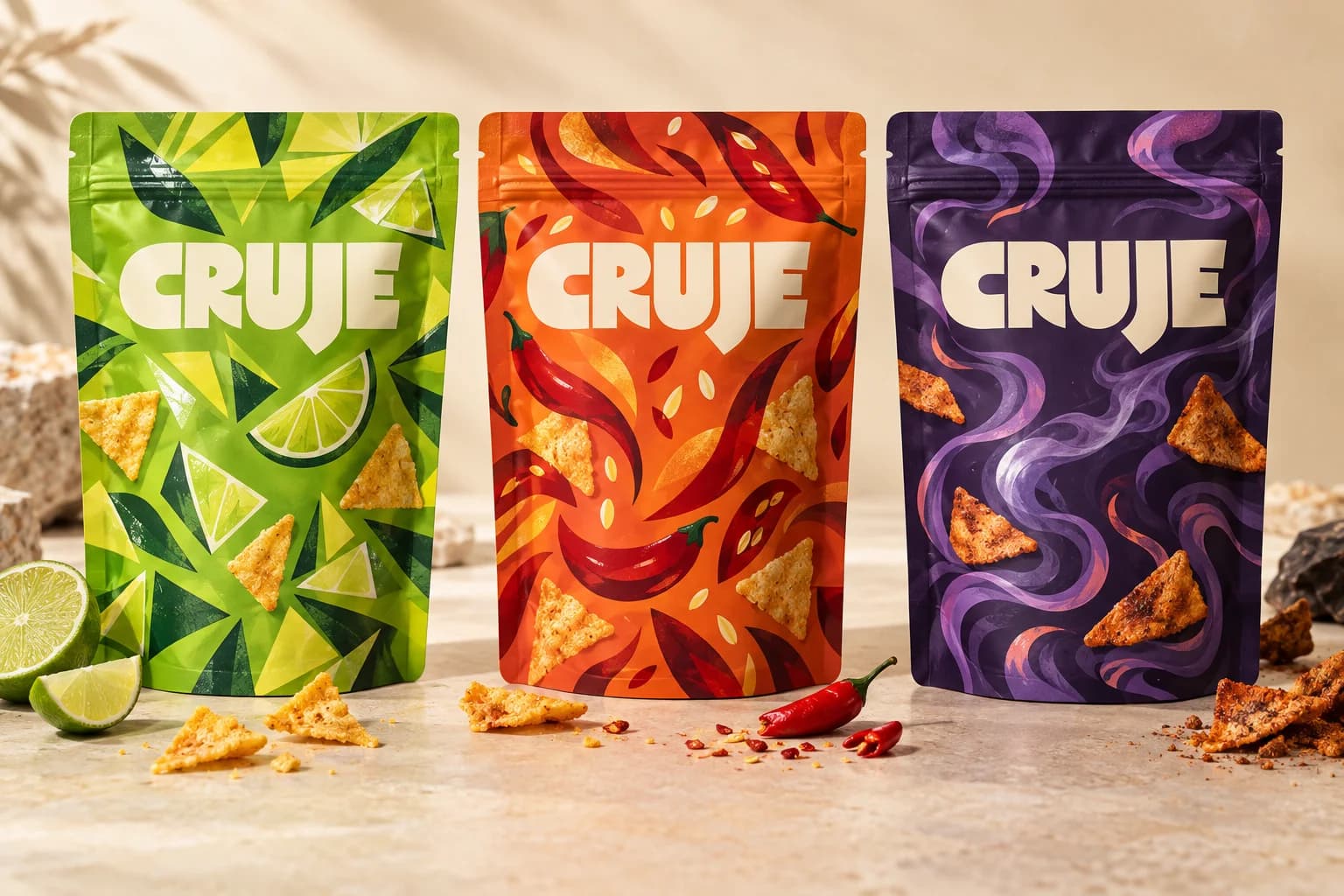
Digital vs. flexography: compare the same pouch
Price both scenarios using the same dimensions, material, closure, quantity and destination. The press changes artwork setup; it does not determine barrier, seals or delivery timing by itself.
| Decision | Digital | Flexography |
|---|---|---|
| Artwork changes | No new plate per image. | May require new plates. |
| Multiple designs | Files can change more flexibly; confirm a shared run. | Ask about setup and cost per artwork. |
| Stable volume | Compare total cost and inventory. | Setup can be spread across more units. |
The difference that changes the quote
Flexography transfers an image using plates mounted on a press. Making the plates and setting up the job adds an initial cost and time that can be spread over a long run. Digital printing takes artwork files without new plates for each image change. HP identifies short runs and on-demand flexible packaging as core applications for its digital presses.
Compare the total cost of each scenario
Request both quotes with the same dimensions, structure, barrier, finish, quantity, and destination. Then compare plates, setup, excess inventory, and the cost of an artwork revision. A lower unit price on a large run may be expensive if you are still learning which flavor, message, or format sells.
- For three flavors or seasonal editions, ask whether the designs can share a run with one material and size.
- For a stable, high-volume SKU, request a flexographic quote too.
- Confirm printing, lamination, conversion, and delivery schedules separately. Press speed is only part of the timeline.
Digital does not make every pouch instantly available
Graphic flexibility does not replace physical requirements. Barrier, seal, gusset, zipper, and product compatibility still need to be specified. Digital is not automatically cheaper or faster at every volume; the economics change as runs grow.
Three cases to decide what to quote first
If you are testing a flavor family with uncertain quantities, ask for a digital proposal by design and in total. If you repeatedly sell one stable design at volume, compare both processes against the same specification. If you need a particular material, finish or barrier, first confirm that the process and converter can make it; the press alone does not determine pouch construction.
- Request total project cost and cost per pouch for each scenario, including setup, plates where applicable, and delivery.
- State quantity per artwork, not only the combined total.
- Ask how the proposal changes if you revise the artwork after the first order.
A practical rule: use digital to learn and version; compare flexography once volume and artwork are predictable. Pouché can review your format and prepare a proposal subject to technical and capacity confirmation.
Tell us about your project