Jerky bags · beef jerky, meat snacks, carne seca
Custom jerky bags: an oxygen barrier and one design per flavor.
Request a jerky bag proposalJerky sells on flavor and is lost to oxygen, moisture and a poor seal. A bag does not make a product safe, your process does, but it decides whether what left the plant in good shape reaches the customer the same way. This page organizes what a jerky or meat-snack maker decides before requesting a proposal; which format, barrier and closure are available for your order is confirmed by the producer.
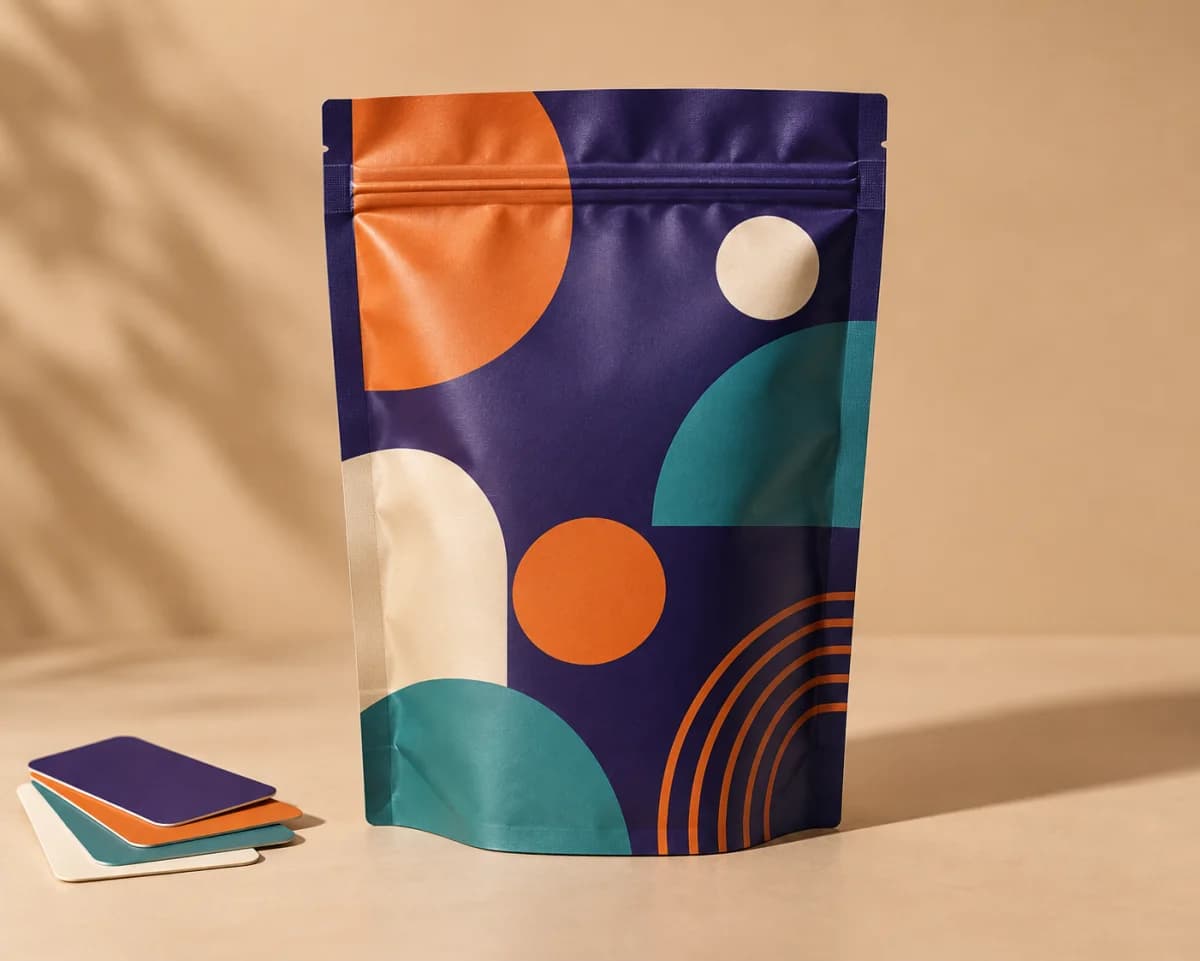
Six decisions before you quote a jerky bag
Start with your process: how you dry, how you pack and how long the product must last on the shelf.
- 01
Format
A stand-up with zipper for packs eaten over several sittings and displayed upright; three-side seal for single portions and samples; a flat pouch if your process vacuum-packs, because a vacuum pouch clings to the product and no longer stands. For 500 g or 1 kg bulk packs a flat bottom gives a firmer base.
- 02
Oxygen and moisture barrier
Meat fat goes rancid with oxygen and light, and jerky that picks up moisture from the air changes texture. That is why structures with a metallised or aluminium barrier and a sealing layer are used. A clear window shows the product, but barrier and light protection drop in that zone.
- 03
Oxygen absorber or nitrogen
Many brands add an oxygen absorber sachet or flush the air out with nitrogen. An absorber only works in a high-barrier pouch: if the film lets oxygen through, the sachet saturates. Tell us whether you use an absorber, nitrogen or vacuum, because it changes the structure and the pouch size.
- 04
Water activity and shelf life
Shelf life is set by the process, not the bag. The USDA-FSIS jerky guideline uses water activity as the indicator: 0.85 or lower for product packed in air, and up to 0.91 only when vacuum-packed in oxygen-impervious packaging, generally with a "Refrigerate After Opening" statement. Share yours and we choose barrier and closure with it.
- 05
Seal and zipper
Fat, salt and seasoning that land in the seal area weaken the seal, and a failed seal lets in oxygen and contamination. Careful filling and seal tests with your real product solve it. A zipper lets customers reclose, but once the bag is open oxygen is already in: follow what your label says.
- 06
Label and per-flavor artwork
Reserve space on the dieline for the label information your market requires: in the US meat products follow USDA-FSIS labelling, and in Mexico NOM-051 sets the main display surface and may require warning seals such as excess sodium. With digital printing every flavor can have its own artwork within the same order.
Reference jerky formats
A starting point per pack size; size and structure are confirmed with samples filled with your product.
| Format | Used for | What to check |
|---|---|---|
| Stand-up with zipper, 50 to 250 g | Retail, online sales and gift packs | Bottom gusset so it stands; zipper above the tear notch |
| Stand-up or flat-bottom, 500 g to 1 kg | Bulk and wholesale packs | Check the filled pouch stands; zipper if it is opened many times |
| Three-side seal, 25 to 50 g | Single portions, samples and kits | One main face; mandatory label elements take proportionally more room |
| Flat vacuum pouch | Processes that vacuum-pack | Does not stand; the artwork sits over the product, so test how it deforms |
What we will not assume
We do not publish a minimum, price, turnaround or shelf life. Size, barrier, absorber, window, zipper, number of flavors and production availability change the proposal and are confirmed by the producer. Food safety, water activity and your product's labelling classification are the brand's responsibility with its advisor; we check that the pouch and artwork support your process.
What we need to prepare your proposal
These facts are enough to start; final artwork can wait.
Request a jerky bag proposal- 01Product (beef jerky, other meat snacks, carne seca) and weight per pack
- 02How you pack: in air, with an oxygen absorber, with nitrogen or vacuum
- 03Number of flavors and quantity per flavor
- 04Window, zipper, barcode?
- 05Country of sale and target date
Questions jerky makers ask
Do I need an oxygen absorber?
It depends on your process and the shelf life you want. An absorber lowers the oxygen left inside the bag, but only works if the film is high-barrier; in a bag that lets oxygen through it saturates. If you use one, tell us the sachet size so we leave room for it away from the seal area.
Vacuum pouch or stand-up with zipper?
Vacuum removes the air, but the pouch clings to the product and does not stand. A stand-up with zipper displays better and recloses; to protect the product it is combined with a high barrier and, if your process calls for it, an absorber or nitrogen.
Can the bag have a window to show the jerky?
It can, but the window has no metallised or aluminium layer, so that zone lets in more light and oxygen and the fat goes rancid sooner. If you want one, keep it small; we decide it against the shelf life you need.
How long does jerky last in the bag?
We cannot promise that: it depends on your recipe, drying, water activity, barrier and storage. The bag protects what your process achieved; shelf life is validated by the brand with tests of its packed product.
Can each flavor have its own design?
Yes, digital printing changes the artwork per design without plates. For flavors to share production they must match in size, structure and closure; tell us how many bags you want of each.
How many bags can I order?
It depends on the format, the structure and available production. Tell us your target quantity per flavor and we review it instead of promising a generic minimum.
Tell us what you are packing.
We turn the product, quantity per design and open questions into a reviewed proposal, not an automatic price that ignores the specification.
Request a jerky bag proposal