Chocolate bags · craft chocolate, bars, bonbons, drinking chocolate
Custom chocolate bags: protection from moisture and odors, one design per flavor.
Request a chocolate bag proposalChocolate sells on gloss and aroma, and both are easy to lose: temperature swings and moisture leave white streaks, and it picks up the odors around it. A bag does not replace good tempering or cool storage, but it decides how much of that reaches the customer. This page organizes what a craft chocolate maker or drinking-chocolate brand decides before requesting a proposal; which format, barrier and closure are available for your order is confirmed by the producer.
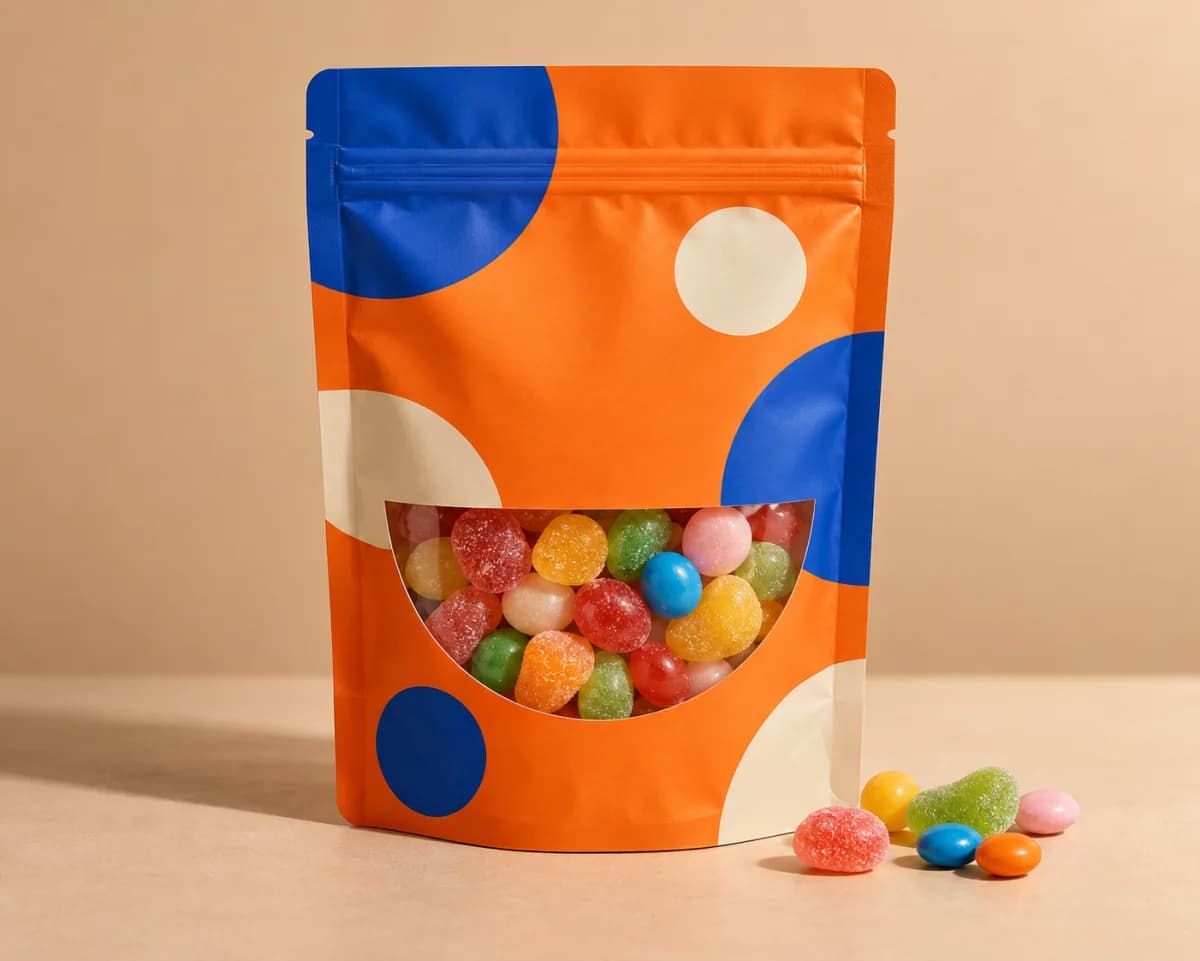
Six decisions before you quote a chocolate bag
Start with your chocolate's journey: where it is stored, how it ships and how long it sits on the shelf.
- 01
Format
Stand-up with zipper for bonbons, pieces, dragées or cacao nibs eaten over several sittings; a flat or three-side-seal pouch for a single bar or portion; flat-bottom for drinking chocolate or cocoa powder in large packs. A bar in a flat pouch needs room around it so it can be sealed without pressing on it.
- 02
Temperature and bloom
White or grey streaks (bloom) appear when fat or sugar migrates to the surface: it happens with temperature swings and with condensation, for example when chocolate comes out of the fridge. As a reference, Iowa State extension suggests storing it at 65 to 70 °F with relative humidity under 50–55 %. No bag stops heat; what it does is hold back moisture.
- 03
Odors
Cocoa butter readily absorbs the odors and flavors of whatever is nearby: coffee, spices, perfume or the room it is kept in. A barrier film and a complete seal protect it; the structure and inks must be suitable for food contact. Tell us if your chocolate ships or is displayed next to aromatic products.
- 04
Window and light
A window shows the product and helps sell colorful bonbons or dragées, but light gets in and barrier drops in that zone. For milk chocolate, chocolate with nuts or fillings, and anything that sits on the shelf for weeks, a small window or an opaque pouch is safer.
- 05
Name and label
Reserve space on the dieline for what your market requires. In the US, FDA standards of identity (21 CFR Part 163) define names such as sweet, milk and white chocolate; in Mexico NOM-186-SSA1/SCFI-2013 does the same, and NOM-051 adds front-of-pack warning seals where they apply.
- 06
One design per flavor or season
With digital printing every flavor, cacao percentage or origin can have its own artwork within the same order, as long as they share size, structure and closure. For holidays such as Valentine's Day or Christmas you can change the artwork without making plates.
Reference chocolate formats
A starting point per pack; size and structure are confirmed with samples filled with your product.
| Format | Used for | What to check |
|---|---|---|
| Stand-up with zipper, 100 to 250 g | Bonbons, pieces, dragées and cacao nibs | Zipper above the tear notch; a window lowers barrier and light protection |
| Flat or three-side-seal pouch for a bar | Bars, single portions and samples | Room to seal without pressing the bar; one main face |
| Flat-bottom or stand-up, 250 g to 1 kg | Drinking chocolate, cocoa powder and family packs | Check it stands when full; opaque if it sits on the shelf a long time |
| Small sachet | Single-serve drinking chocolate and samples | Mandatory label elements take proportionally more room on a small face |
What we will not assume
We do not publish a minimum, price, turnaround or shelf life. Size, barrier, window, zipper, number of designs and production availability change the proposal and are confirmed by the producer. Your product's name and label content are decided by the brand with its advisor; we check that the artwork respects the space.
What we need to prepare your proposal
These facts are enough to start; final artwork can wait.
Request a chocolate bag proposal- 01Product (bar, bonbons, pieces, drinking chocolate or cocoa powder) and weight per pack
- 02Milk, nuts or fillings? How is it stored and shipped?
- 03Number of flavors or designs and quantity of each
- 04Window, zipper, barcode?
- 05Country of sale and target date (is it seasonal?)
Questions chocolate brands ask
Why does my chocolate turn white?
That is bloom: fat or sugar migrating to the surface after temperature swings or condensation. The bag does not cause it, but a moisture barrier and stable storage reduce it; tempering counts too.
Can chocolate be stored next to coffee or spices?
Better apart, or in sealed barrier pouches: chocolate picks up odors easily. If your products ship or are displayed together, tell us so we choose the structure.
Window or no window?
A window sells colorful bonbons and dragées, but light gets in and barrier drops in that zone. For milk chocolate, chocolate with nuts or long shelf life, a small window or none is safer.
Can I call my product chocolate?
In the US the FDA standards of identity for cacao products decide it, and in Mexico NOM-186-SSA1/SCFI-2013; if the recipe does not meet them, the name changes. That is the brand's call with its advisor; we leave room in the artwork for the right name.
Can each flavor or season have its own design?
Yes, digital printing changes the artwork per design without plates. For designs to share production they must match in size, structure and closure; tell us how many bags you want of each.
How many bags can I order?
It depends on the format, the structure and available production. Tell us your target quantity per design and we review it instead of promising a generic minimum.
Tell us what you are packing.
We turn the product, quantity per design and open questions into a reviewed proposal, not an automatic price that ignores the specification.
Request a chocolate bag proposal